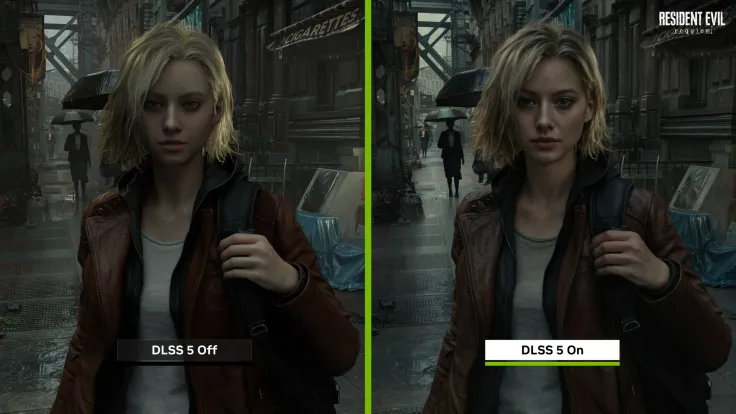
Nvidia's next-generation DLSS 5 technology has triggered a wave of criticism after its debut showcased a shift towards generative AI-driven graphics, with gamers and developers arguing that the results appear 'uncanny' and risk undermining artistic control in video games.
The backlash comes despite Nvidia's claims that the system delivers a major leap in photorealism through real-time neural rendering.
DLSS 5 Introduces Generative AI-Powered Rendering
Nvidia's Deep Learning Super Sampling (DLSS) has been a key feature of its RTX graphics cards since 2018, traditionally focused on AI upscaling and frame generation to improve performance and visual quality. DLSS 5 represents a significant evolution, with Nvidia describing it as a 'real-time neural rendering model' that integrates generative AI into the rendering pipeline.
The company says the system uses in-game data such as colour information and motion vectors to enhance lighting, textures and materials. It is designed to maintain consistency across frames while delivering what Nvidia claims is a level of photorealism previously seen only in high-end visual effects.
According to Nvidia, DLSS 5 can interpret complex scene elements including characters, hair, fabric and lighting conditions, such as back-lit or overcast environments.
Gamers Criticise 'Uncanny' and Over-Processed Visuals
Early demonstrations of DLSS 5 have sparked widespread criticism across gaming communities. Many users have pointed to what they describe as overly detailed and unnatural visuals, particularly in character faces, which appear heavily smoothed and artificial.As reported by Ars Technica, the technology has been widely criticised for producing an 'uncanny' effect that alters character features and reduces the distinct visual identity of games.
Online reactions have compared the output to heavily air-brushed imagery, with some describing it as creating 'uncanny' results that distort original game models. Others have argued that the technology flattens lighting and removes visual depth, producing a more uniform but less distinctive aesthetic.
The term 'uncanny valley' has frequently been used to describe the effect, as players note that the enhanced realism does not necessarily translate into a more authentic or appealing visual experience.
Developers Raise Concerns About Artistic Intent
Game developers and industry figures have also expressed concern that DLSS 5 could interfere with artistic direction. Some have argued that the system's generative approach risks overriding carefully crafted lighting, textures and visual design decisions.
Thomas Was Alone developer Mike Bithell commented that the technology appears suited for situations 'when you absolutely, positively, don't want any art direction.' Others have criticised the system for adding detail at the expense of creative intent, suggesting that it produces a more technically detailed but less characterful result.
Concerns have also been raised that widespread adoption of such tools could standardise game visuals, reducing the diversity of art styles across the industry.